When One of Our Shetland Hens Broke Her Beak: A Lesson in Resilience
- luckydoublelcattle
- 7 days ago
- 3 min read
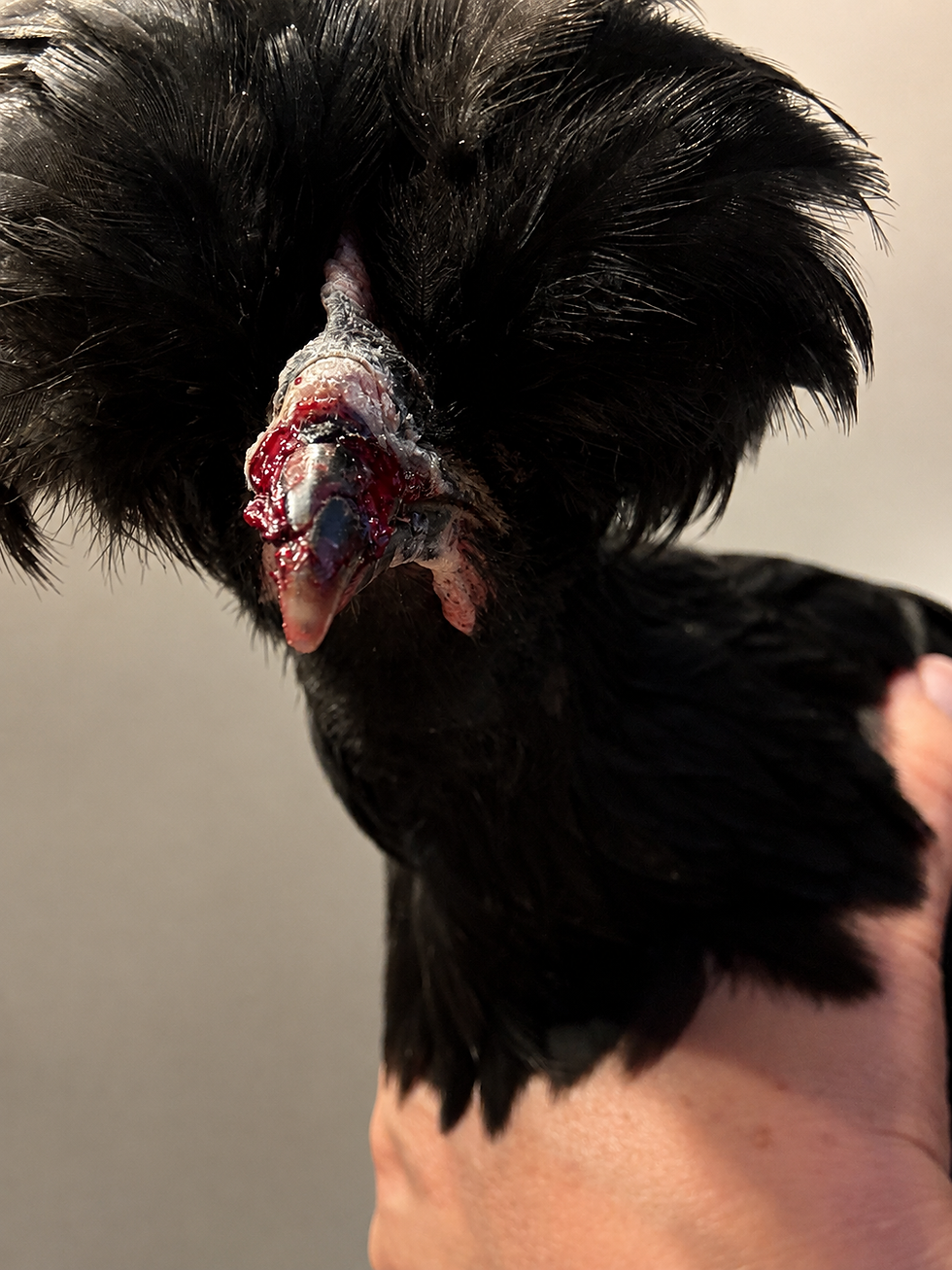
One of the hardest parts of raising animals is knowing that, despite your best efforts, accidents still happen.
Recently, one of our rare Shetland hens suffered a broken upper beak. It was one of those moments every poultry keeper dreads. We immediately began asking ourselves the same questions many flock owners would: Will she be able to eat? Will it heal? Is there anything we can do to help?
Fortunately, birds are remarkably resilient.
What Causes a Broken Beak?
A chicken's beak is made primarily of keratin—the same material that makes up our fingernails. Beneath that outer layer is living tissue supplied with blood vessels and nerves.
Beaks can be injured by:
Flying into fencing or coop walls
Predator encounters
Fighting with other birds
Getting caught in wire or hardware cloth
Falls from roosts
Accidental impacts while free ranging
Because Shetland hens are active, curious birds, they're no strangers to exploring every corner of the pasture, which can occasionally lead to mishaps.
Why a Broken Beak Matters
A chicken depends on its beak for nearly everything.
It uses it to:
Pick up feed
Drink water
Preen feathers
Explore its environment
Defend itself
Communicate with the flock
Even a small fracture can make these everyday tasks difficult.
The severity of the injury depends on whether only the keratin sheath has broken or if the underlying living tissue has also been damaged.
Caring for an Injured Hen
The first priority is making sure the hen continues eating and drinking.
For our Shetland hen, we've been closely monitoring her throughout the day to ensure she's able to find food and stay hydrated. Birds are surprisingly adaptable, and many quickly learn new ways to eat while their beak heals.
Depending on the injury, supportive care may include:
Offering softer feeds such as soaked pellets or wet mash
Providing shallow water containers that are easier to drink from
Keeping feed readily available
Monitoring body weight
Watching for signs of infection or worsening injury
Reducing stress by keeping the environment calm and familiar
If a beak injury is severe, actively bleeding, or prevents a bird from eating or drinking, it's important to seek veterinary care. Some fractures can be stabilized, and pain management may be necessary.
Can a Chicken's Beak Grow Back?
One of the most common questions people ask is whether a broken beak will heal.
The answer is: often, yes.
Because the outer beak continually grows throughout a chicken's life, many cracks and chips gradually grow out over time. Healing depends on where the break occurred and whether the growth center at the base of the beak was damaged.
Minor breaks may become barely noticeable after several months. More significant injuries can leave permanent deformities, but many birds still live long, healthy lives by adapting remarkably well.
A Reminder That Farming Isn't Always Picture Perfect
Social media often shows the beautiful side of homesteading—the fluffy chicks, colorful eggs, green gardens, and breathtaking sunsets.
What it doesn't always show are the difficult days.
Animals get sick.
Predators find opportunities.
Accidents happen.
And sometimes your heart hurts a little because one of your favorite hens is recovering from an injury you wish you could have prevented.
These moments remind us that caring for animals means showing up not only when things are easy but especially when they're hard.
Why We Share the Hard Days
At Lucky Double L Cattle Company, we believe in sharing the full story of ranch life.
We celebrate successful hatches, healthy calves, and abundant gardens—but we also share the setbacks, losses, and unexpected challenges that come with stewarding livestock.
Our Shetland hen may have a broken beak, but she still greets us each morning with determination. She continues to scratch through the grass, stay close to her flock, and remind us that resilience often comes quietly.
We're hopeful that, with time, good nutrition, and attentive care, she'll continue healing one day at a time.
Sometimes the strongest animals aren't the biggest or the fastest.
Sometimes they're simply the ones that refuse to give up.
And we think that's a lesson worth remembering—for both our flock and ourselves.


Comments